Home / Assembling a glulam kit in winter
Assembling a glulam kit in a Moscow winter
Winter is not a reason to stop, but it is a reason to change three things: the foundation schedule, the sealing material and who signs off the kit on arrival.
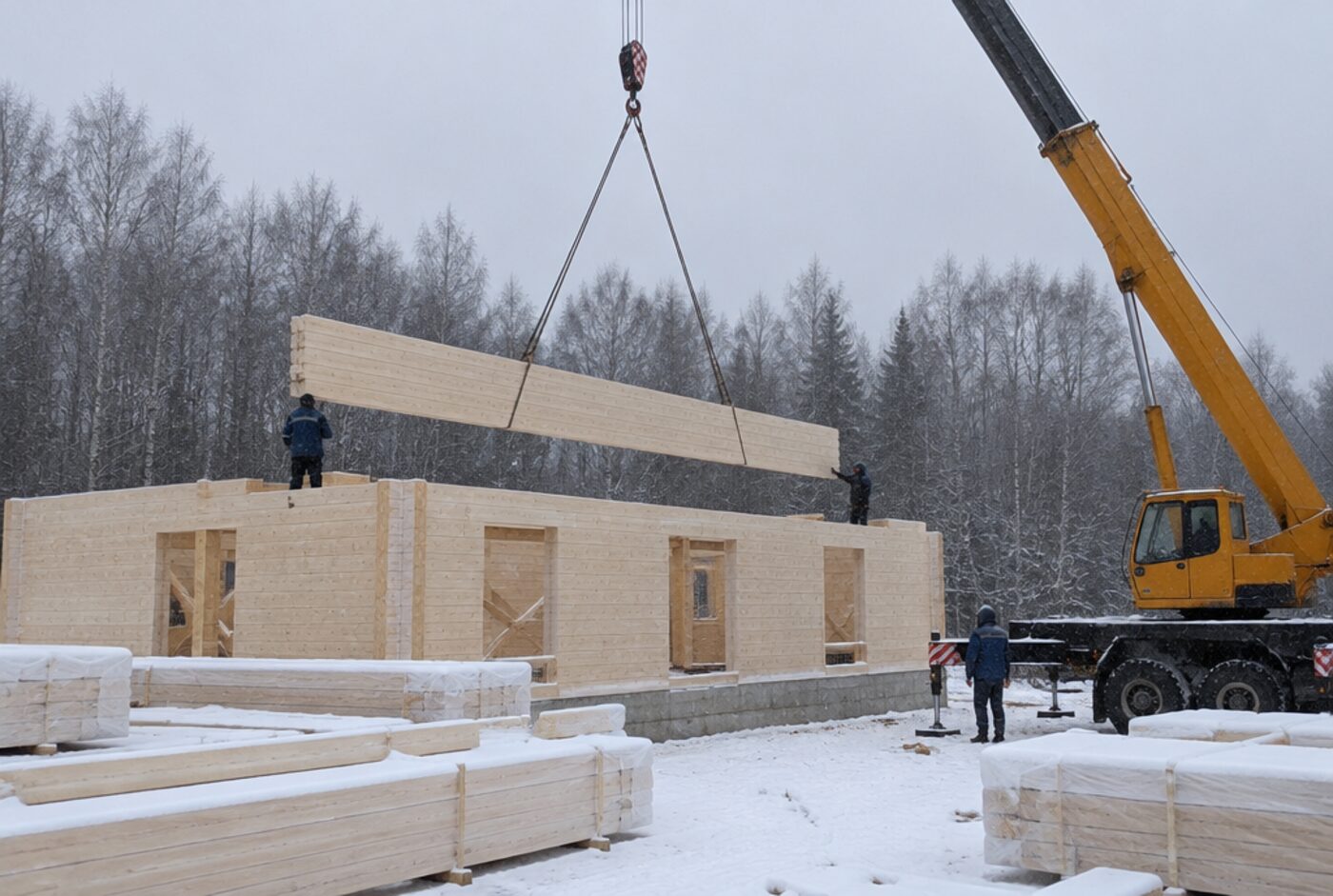
What winter actually helps
Frozen ground carries a crane better than spring mud, and a kiln-dried beam does not care about frost — it is already at the moisture it will live at. Sites around Moscow are also cheaper and less congested between December and March, and a factory queue in January is shorter than in May.
The three things that change
- Foundation. Concrete poured below +5 °C needs admixtures, heating cable or a tent — all of which belong in the estimate before the first truck arrives. The common honest answer is to pour the slab or piles in autumn and assemble the walls in winter.
- Sealing. Tapes and sealants have a minimum application temperature; below it they do not bond, and the joint will be found by a thermal camera later. Ask which product the crew uses and what its lower limit is.
- Acceptance. Snow hides defects. Beams must be accepted on the truck, not from under a drift two weeks later; photograph the ends and the finger joints on arrival.
What not to do
Do not start the interior finish while the house is heated by a construction gun. The sudden rise in temperature with wet concrete drying under it produces condensation exactly where you cannot see it. Close the contour, let the building breathe at a moderate temperature for a few weeks, then finish.